The other week, I was talking about the ‘Principles Police’, joking that you can’t really do principles wrong – they’re just a description of how something works.
To illustrate this, I took another principle—gravity—and invited you to imagine “doing it wrong” … I mean, it’s just not a thing, is it?
Now, the other rock solid, reliable aspect of principles is that they work 100% of the time, whether you believe in them or not, or you’re thinking about them, or even if you’re completely unaware of their existence – they’re just there and they just work.
1) Constant
2) Explanatory
3) Predictable
You don’t have to get involved and ‘use’ them or anything, you’re just bimbling around in a reality where these principles—like gravity—operate without exception, and because they do, you pretty much completely forget about them, and get on with your life.
(I guarantee that unless your job is an Astro-physicist, you would not have contemplated gravity once today, until I started banging on about it and brought it into your consciousness.)
So, today I’d invite you to consider what would happen if gravity sometimes didn’t work?
How would you behave, if there was an outside chance that at some point during the day, gravity would stop?
🤔
I reckon you’d end up doing something like this:
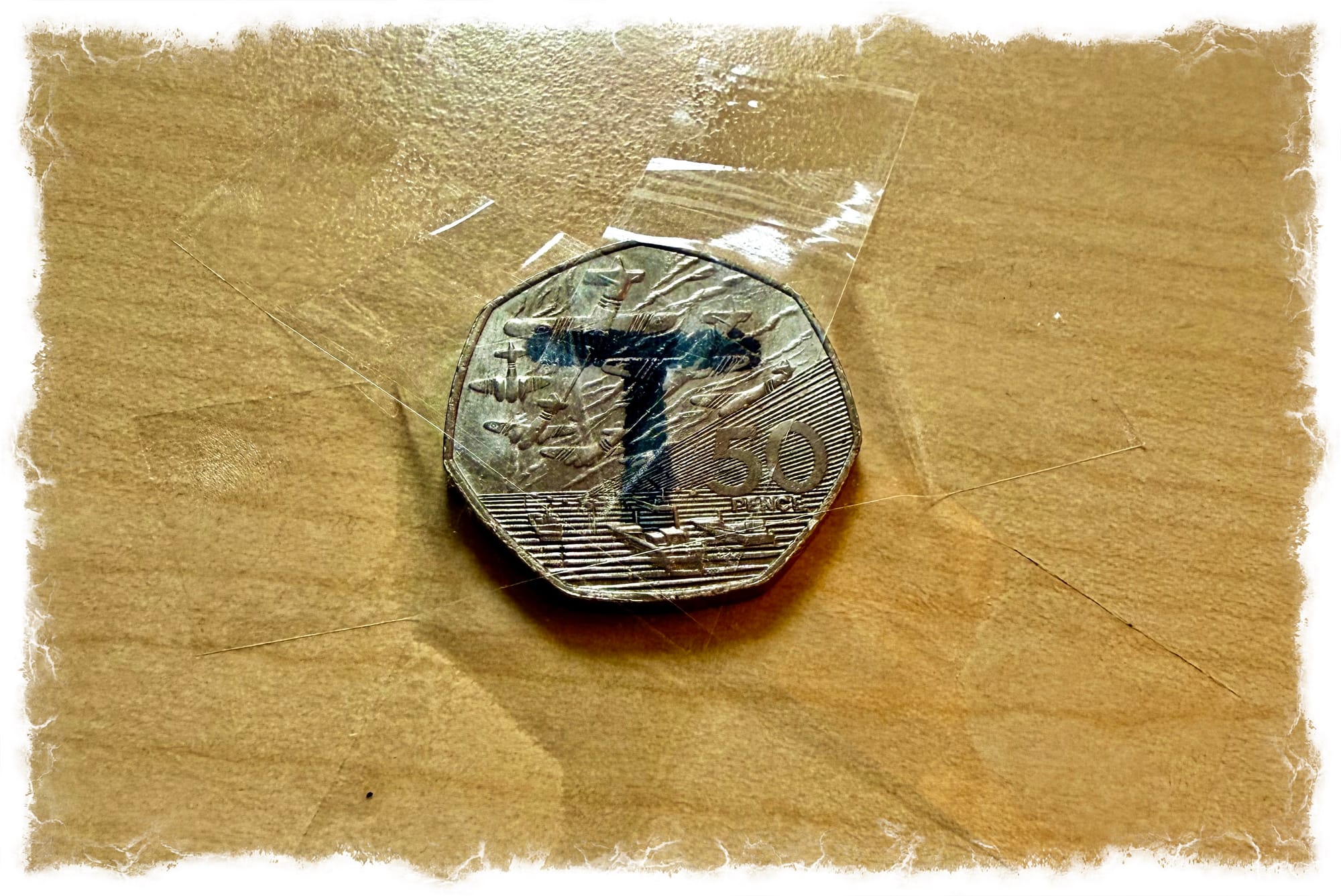
Why?
Because if there was the faintest chance that stuff would float off (especially cash!) then you’d want to make sure it didn’t.
Even if you knew gravity worked 99.9999999999% of the time, but it didn’t for 0.0000000001% of the time, you’d still have to tape stuff down, just in case.
It doesn’t matter that most of the time it works. You’ve got to live in a reality where it doesn’t (sometimes). It’s a big deal, there’s constant uncertainty and you have to think about it a lot, now.
Bummer.
It’s the same with the principles behind your psychology.
➤ 100% of our feelings come from (the Principle of) Thought
➤ 0% of our feelings come from our circumstances
Even though it doesn't look that way.
Which means you can completely forget about it, and get on with your life.
If you have a crazy reaction to something, you can just chuckle, and marvel at the power of the thing – Blimey, look how true Thought made that look!
There’s no debate. No analysis required. You forgot for a moment, that’s all, because you’re human.
But if you’re bimbling around in a reality where you think that it’s probably Thought 99% of the time—yeah, that’s what Giles is saying, isn’t it?—but there are exceptions and 1% of your feelings aren’t Thought, they’re actually coming from:
- that bastard who said or did that thing 😡
- bad news in an email 😩
- your boss 👨💼
- how much money’s (not) in the bank 💸
- the presentation you’ve got to give next week 😱
- your childhood 😥
- what so-and-so thinks of you 🤡
… then your mind is going to do the equivalent of having a coin sellotaped to your desk, ‘just in case’ – it’s going to attribute EVERYTHING that happens to the 1% chance that it might not be Thought.
It doesn’t matter that most of the time it works. You’ve got to live in a reality where it doesn’t (sometimes). It’s a big deal, there’s constant uncertainty and you have to think about it a lot, now.
Bummer.
This is why when working with individuals and groups, I get quite tiresome with the whole ‘100%’ thing, and turn myself inside out with the stories and metaphors and demonstrations and exercises and diagrams and poems and song lyrics and video clips… to help you see that although it really looks like some small percentage of your experience of life comes from the stuff that’s happening ‘to’ you… that’s simply not possible.
It either works entirely this way, or it doesn’t work this way at all.
There’s no such thing as a ‘mixed’ paradigm.
💟
Giles
p.s. If you disagree and can come up with a mechanism by which an internal felt state, or meaning, could be somehow transmitted from another object or person, please put me straight in the comments. My entire career is built on these principles, and if they're wrong, I need to know! 😬
Mentioned above
 Giles P Croft