We like sleep, here at the Daily Reminders. Sleep is awesome.
Thing is, we don’t always get what we think we should.
Especially when there’s loads going on. It’s a pretty simple equation really:
Loads on your mind = Less sleep.
Certainly for me, anyway. YMMV.
And at the moment, working towards the launch of a new website, I’ve got a very “zingy” mind.
Lots of ideas. Lots of tasks to juggle. Lots of problems to solve. It’s like I’ve suddenly opened a door to a room I’d not noticed before, walked in and found there’s a big old party going on in there – lots of conversations, many distractions.
And the way I’ve noticed my mind dealing with this, is a change in my sleep patterns. I’ve gone all medieval!
🏰
So what's that then?
Well, I read that in the pre-industrial era, especially in Northern Europe where we get these shorter days, the established pattern of nocturnal activity was not one sleep, but two.
You’d go to bed after a hard day’s work in the fields, sleep until the early hours, then get up, do some stuff for a few hours in the dark and quiet, and go back to bed again.
Apparently it’s mentioned loads in medieval texts, and the period between sleeps even had a name: the watch.
It was just the way it was. The way humans were.
You were asleep for a bit. Then awake for a bit. Then asleep for a bit.
Until the Industrial Revolution, where your capitalist overlords required you to be up sharp and working all hours in the new factory!
😆
In fairness there were probably other factors influencing the disappearance of this practice—electric lighting, changing cultural norms around late night socialising, that sort of thing—but it’s only in the last 150 years that we’ve taken to heart this conditioned rule that:
A Good Night’s Sleep™ = 8 hours straight through
💁🏻♂️
And you know what happens when a mind gets hold of a made up rule, don’t you?
That’s right, it pathologises anything that breaks it. Gives it a label. Freaks itself right out.
Suddenly, you’re lying there in the dark, thinking there must be something wrong with you because it’s 2am and you’re wide awake. It’s insomnia now. Come on boffins, we need to sort this problem! Pronto!
😳
Now I say, “the way humans were” but there’s evidence that we still are, under the right conditions. They did studies in the 1990s where they shortened the amount of light people received for a month (with 14 hours of darkness, to mimic pre-industrial winter nights) and discovered that their sleep patterns reverted to this natural double-sleep.
Asleep for a bit. Then awake for a bit. Then asleep for a bit.
Which is what I’ve been finding myself doing, lately. (It’s November – all the darkness helps.)
I’ve been working into the evening. Dropping like a stone. Waking up in the early hours. Getting up in the still, dark quiet. Doing some more work. Then going back to bed again.
My daughter even made me a medieval night light to work by, look!
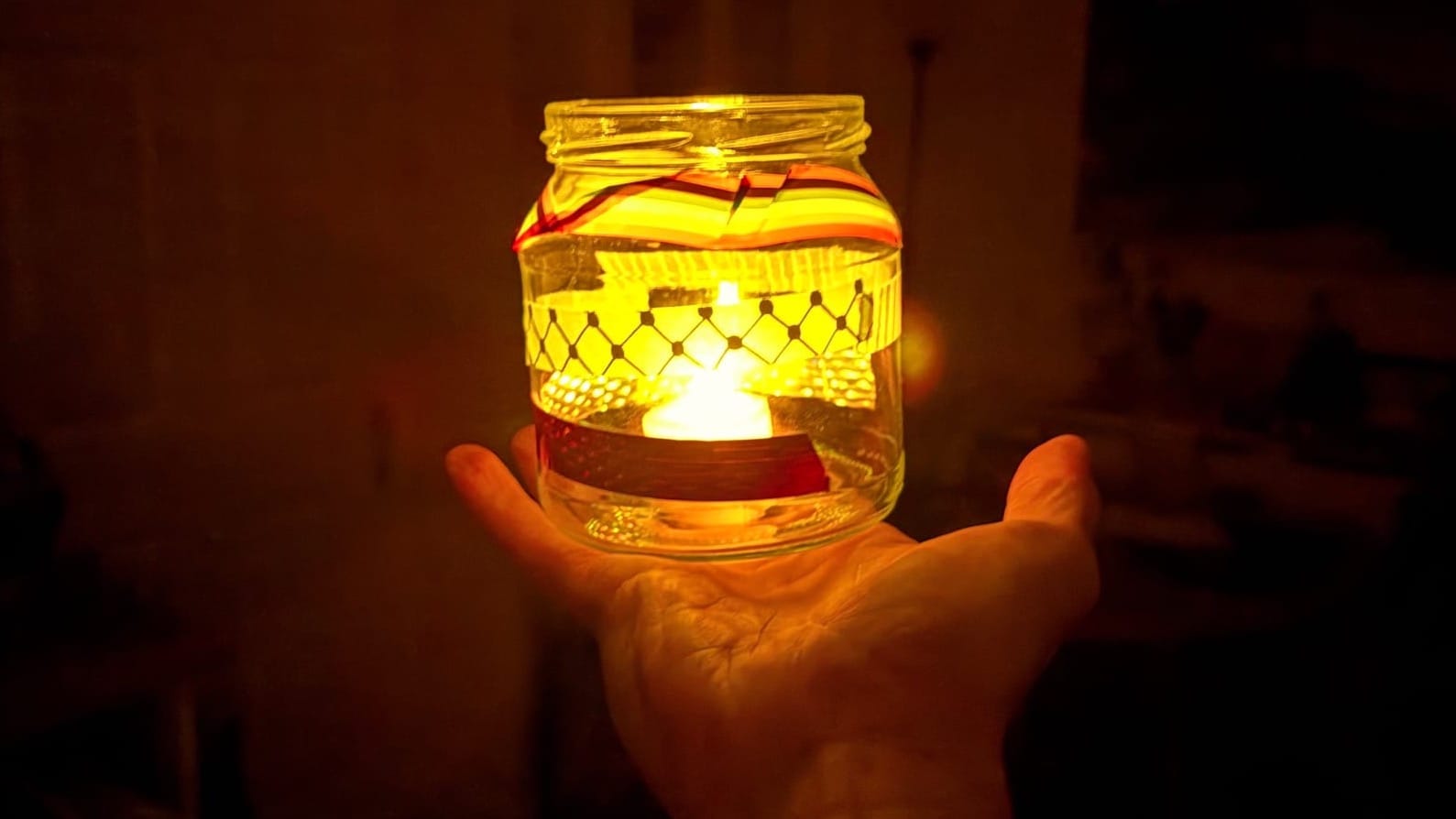
And while I think in the past I’d have maybe considered there was something “wrong” with that, since I learned all about how humans naturally rest, I’m quite proud to consider myself a “medieval sleeper.”
Come on, get on the bandwagon.
It can be our little rebellion against our capitalist overlords!
✊🏻
Giles
Your next read
 Giles P Croft