


As metaphors go, it's hard to beat the use of clouds to describe the notion of thought and how it affects us.
- “It'll pass”
- “You just have to weather the storm”
- “Every cloud has a silver lining”
But if we delve a little deeper into the nature of the human experience, we start to see that it's all thought – the whole shooting match! Without thought, there would be no experience.
→ In each moment that passes, to feel it, you have to think it.
→ In each moment that passes, if you think it, you feel it.
The two are inseparable; so much so that you have my permission to consider them to be one and the same thing:
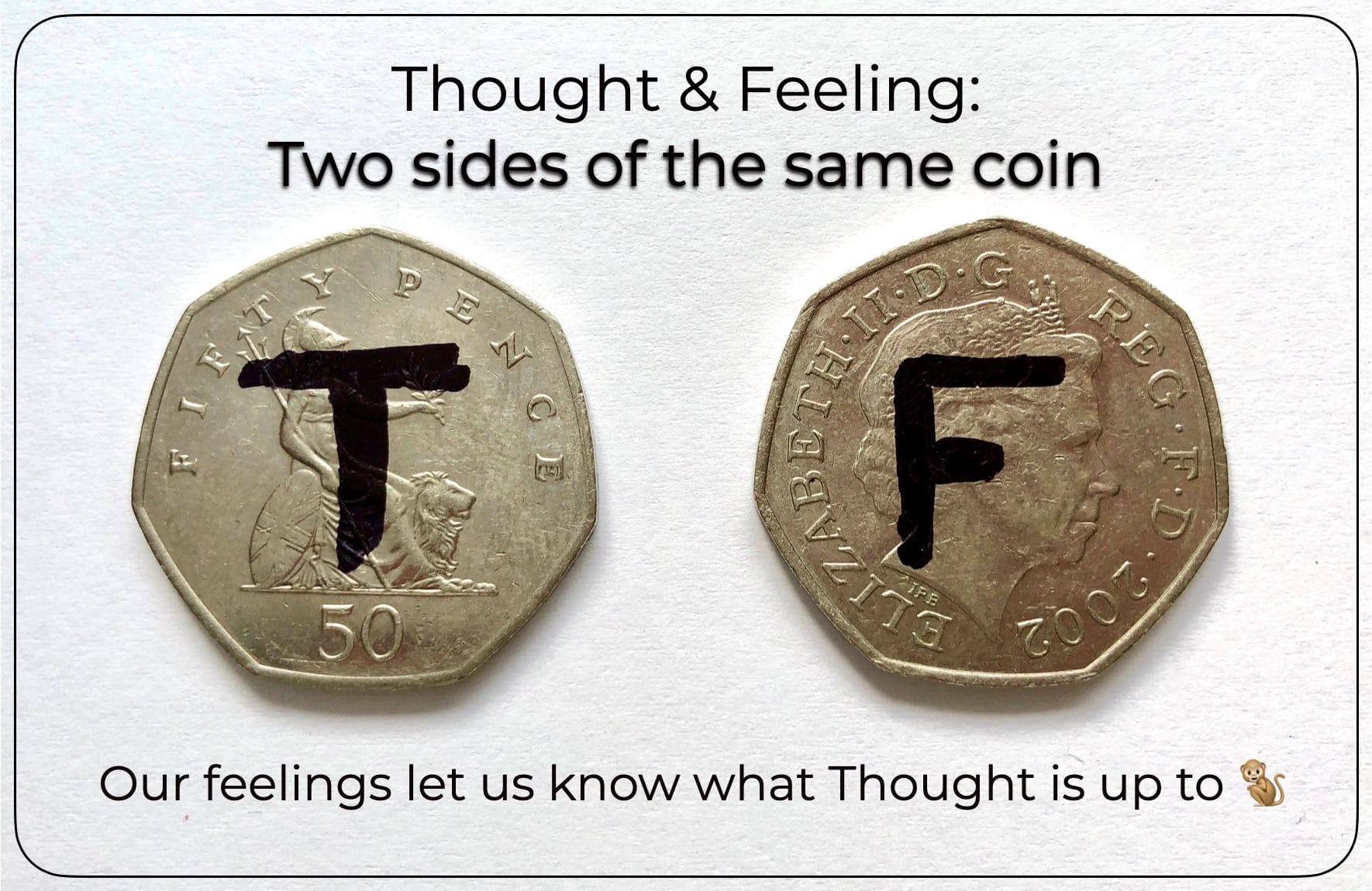
You see, it always really seems like we're experiencing our circumstances directly—that they're somehow making us feel a particular way; that they're responsible for our emotions—and yet we forget that there's a missing link between what happens to us and everything that comes after that… and it's Thought.
Not a thought, but the Principle of Thought itself – the perceptual process that brings the raw, meaningless data of our environment to life.
The process that creates our reality in the moment. It's quick as a flash and we're blissfully unaware it's happening – it’s evolved to be a seamless process (although it can be tricked easily).
And this is where clouds take on a deeper significance. Because more than being something that we have to weather until the blue skies return, in reality Thought is an omnipresent fact of life. Like oxygen. Or water. An elemental building block of the human experience, imbued with as much meaning as we're willing to ascribe to it.
- Like clouds in our atmosphere, they're always there
- Like clouds, they come and go. (A blink of an eye, in the big scheme of things.)
- Like clouds, they only ever obscure the sun & sky (our True Nature), they don't affect it in any way
- Like clouds, they don't have to stop us in our tracks
- Like clouds, we notice the ones we notice, but the vast majority pass us by
- Like clouds, they take on an infinite number of appearances
- Like clouds, they have no inherent quality of ‘good’ or ‘bad’ – they just are
I invite you to take a full 7 minutes out of your life, slow down and watch this video of various cloud & storm formations (ideally on a big screen):
Made with timelapse photography, well before AI was a thing.
It's utterly mesmerising, and not a little overwhelming at times, especially with the rousing soundtrack.
As you're watching it, marvel at the many different forms these clouds (thought) can take. Always on the move. Always changing shape. Always passing through.
And when you get right to the very end of the credits, see how that beautiful swirling tower of cloud (thought) continually disperses, regenerates, twists, comes and goes, irrespective of the immeasurably large sky it's in… and take comfort in that.
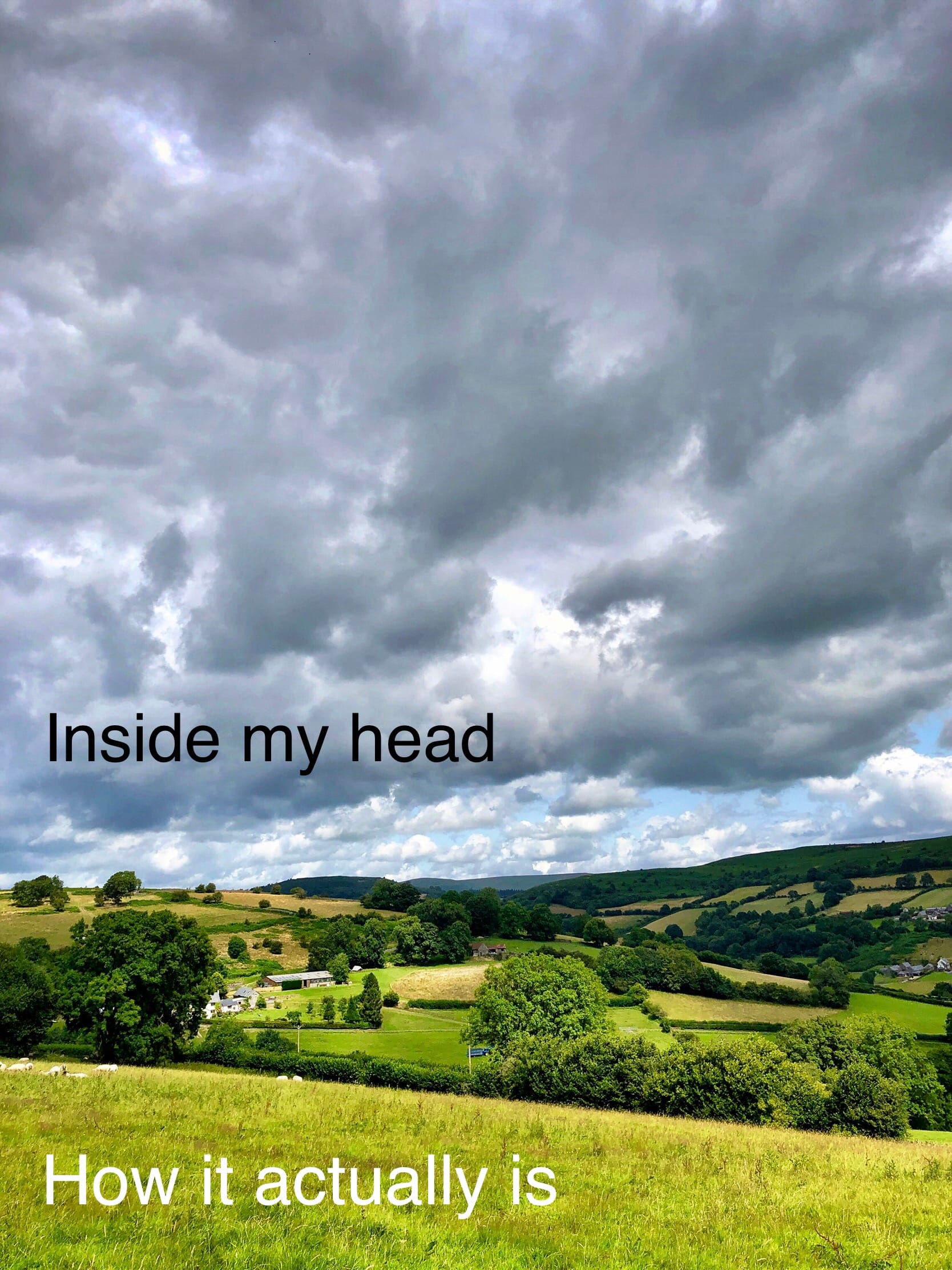
I was out walking on my own once, busy beating myself up about various aspects of life and work that weren't matching up to my made up rules.
Obsessed with the content of the various thought forms instead of marvelling at the fact of thought… and what lies beneath it all.
I took this photo, and for a moment (several moments, throughout the day, as I kept catching myself) it all made sense.
🌤️
Giles