


Last week I wrote a piece that resonated with quite a lot of you – it was called Ripples on the pond.
One of several water-based metaphors I've shared recently, it was about how situations create ripples of reactive thought when they occur, and how those ripples settle, all by themselves.
Just like a nice, still pond, after a stone is thrown in.
So I want to conclude this impromptu ‘water series’ with a story I shared some time ago, but that I haven't had chance to publish on the website yet… until now.
It's a real life example of this self-correcting phenomenon, and it takes that ripples metaphor a little further.
A friend of mine was laid up in bed with a cold. Too wiped out to do much, she found herself scrolling Instagram more than usual.
And it made her feel rubbish.
She only really clocked how rubbish it had made her feel once she started feeling better and spending less time on it.
Her conclusion?
Less social media is good.
Makes sense, yeah? Social media is a minefield of comparison. It’s designed to throw stones into the nice calm pond of your mind.
While you’re over there feeling insecure about someone’s seemingly perfect life, that very same someone, in a similar frame of mind, is looking at their feed, feeling insecure about everyone else's seemingly perfect lives.
Maybe even yours! 😂
So does that mean the answer is to quit entirely?
You could, for sure.
(And between you and me, total avoidance is the approach I’d probably take with younger kids. Their minds are still forming, and social media isn’t exactly built to nurture self-esteem.)
But for us grown ups? There’s a more powerful way to approach it.
Because it’s not social media that’s the problem. It’s the mind’s reaction to it.
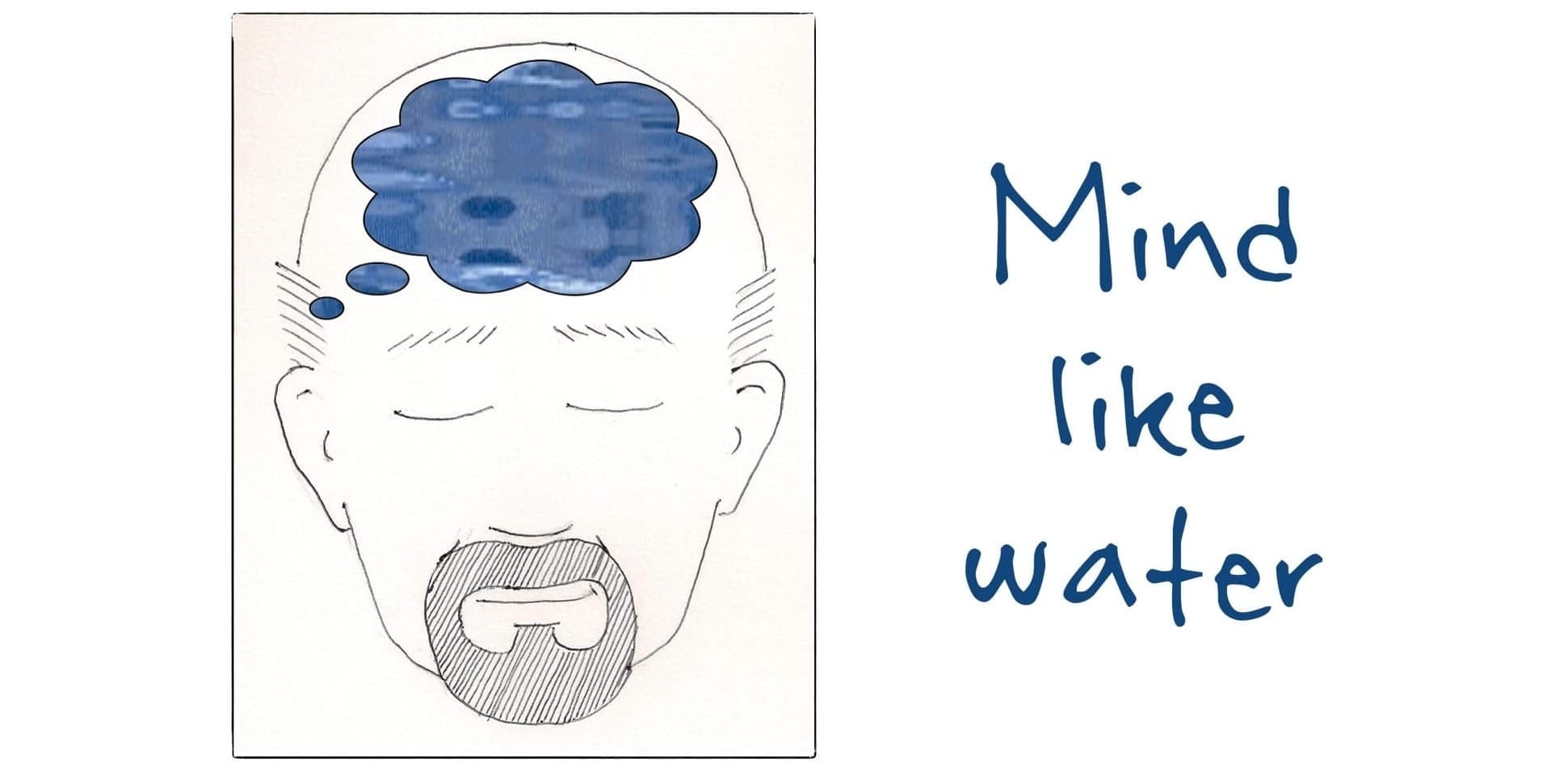
If you’re in a low state of mind—feeling a bit sorry for yourself, not up to much, struggling to keep on top of things—it’s only natural that scrolling will create a reality full of comparison, self-doubt, and imposter syndrome.
Big old stone thrown into your pond.
That’s just how minds work. It doesn't signify a critical flaw in your personality or anything – it's just something that’s good to know.
Because once you see that it’s not what’s on the screen, but the mind-state it’s being viewed from, everything changes. Remember:
You don’t have to manage your thinking. Ripples settle down on their own. The mind settles down on its own.
Seeing that, allows you to use social media to your advantage.
Instead of having an experience from within the mind’s experience of fear and comparison, there’s curiosity:
“Oh, look where the mind went just then. How fascinating. What’s it rubbing up against? Is there actually something here I’d genuinely love to do, but my mind’s stories have held me back?”
Now we’re talking inspiration, not insecurity!
Be your own guide
Now, I’m the first to admit, if you catch me in a mood like this, it’s not like I can just flip a switch and go from imposter experience 😩 to inspired experience 🤩 at the click of a finger.
No. You have to be in touch with your current felt state, and act accordingly; be your own guide.
If we’re lying ill in bed, feeling a bit sorry for ourselves, unable to attend to the basics of life (let alone run a thriving business!) then it’s only natural that the thought-created reality we experience will be fearful, very left-brained: separation, judgement, comparison.
Knowing that, is where the power lies. It opens up that space of choice:
Am I in a place where this is wise? What’s a good use of my attention, right now?
And in these situations, it’s probably best instead to catch up on your backlog of Daily Reminders, eh?
Get pointed back to what’s true.
😉
Giles
p.s. We look in a bit more depth at managing fluctuations in mood, in Lesson #7 of the Introduction to Innate Health Series. It's free to all Daily Reminders members, and if you're a Premium 🔖 subscriber, you get an entire Self-Study Course, built around the lessons, too!

Want to receive helpful, insightful content like this, regularly? The Daily Reminder is a quick, lighthearted email that arrives in your inbox, and helps you to start your day in the right frame of mind.
“They feel like a moment of stillness in a world of madness.” ~ Neil, UK
🎁 Also included automatically when you sign up: an Introduction to Innate Health Series of 8 short lessons, designed to help you ‘Think less, and live more’.
“One of those small things with big impact. Honestly, just sign up!” ~ Paula, UK
Related
 Giles P Croft

'Tis the season for it.