


I want to follow up on yesterday's Daily Reminder, that looked at what's going on when we're at loggerheads with someone else.
If you haven't watched the short (3 min) video I posted, all about finding common ground when we're disagreeing with someone, then I recommend taking a moment to do so (it's really good)! → Finding common ground in conflict.
You back? Hurrah!
Now, you'll have noticed I finished that video with the ‘solution’ to this problem (although strictly speaking, it's just a natural follow-on from seeing how it all works) and today, I want to go into that a bit more by offering some practical advice.
(I know, right! 😮)
Because it came up with a client and it helped them—really helped them, I found out, later that day—so I don't see why you shouldn't benefit from this little tip, too.
My client presented with a common enough problem: regular tricky conversations with someone close (over the phone). Nothing abusive or worrying, just a persistent failure to see eye to eye, and a feeling on both sides that things could, and maybe should be much better.
(We've all been there, don't pretend otherwise.)
And they wanted to know what to do. Because they had one coming up.
The way the coaching conversation was going, it made sense to me to share the same Richard Carlson piece of writing I read out in yesterday's video, and then we got to looking at how we might apply that understanding to a future conversation.
Now, giving people advice and telling them what to do aren't really my bag (how the hell should I know what's right for anyone?!) so I was a bit stumped, and all I could come up with was what seemed like a little bit of a lame suggestion to go into the conversation with the following question on their mind:
Am I going in ‘detailed’ or am I going in ‘simple’?
🧐
Because ‘detailed’ is all the stuff that lives inside that rabble-rousing Thought System 📦 of ours, so it's things like:
- Past conversations & interactions
- Our appraisal of ‘how they are’
- Expectations of how the conversation should go (or probably will go, amirite)?
- History we have with them – old disagreements, or disappointments
- What we think they should do…
…and a bazillion other things that minds like to place front and centre when in these sorts of interactions.
Whereas ‘simple’ is just listening.
Like this:
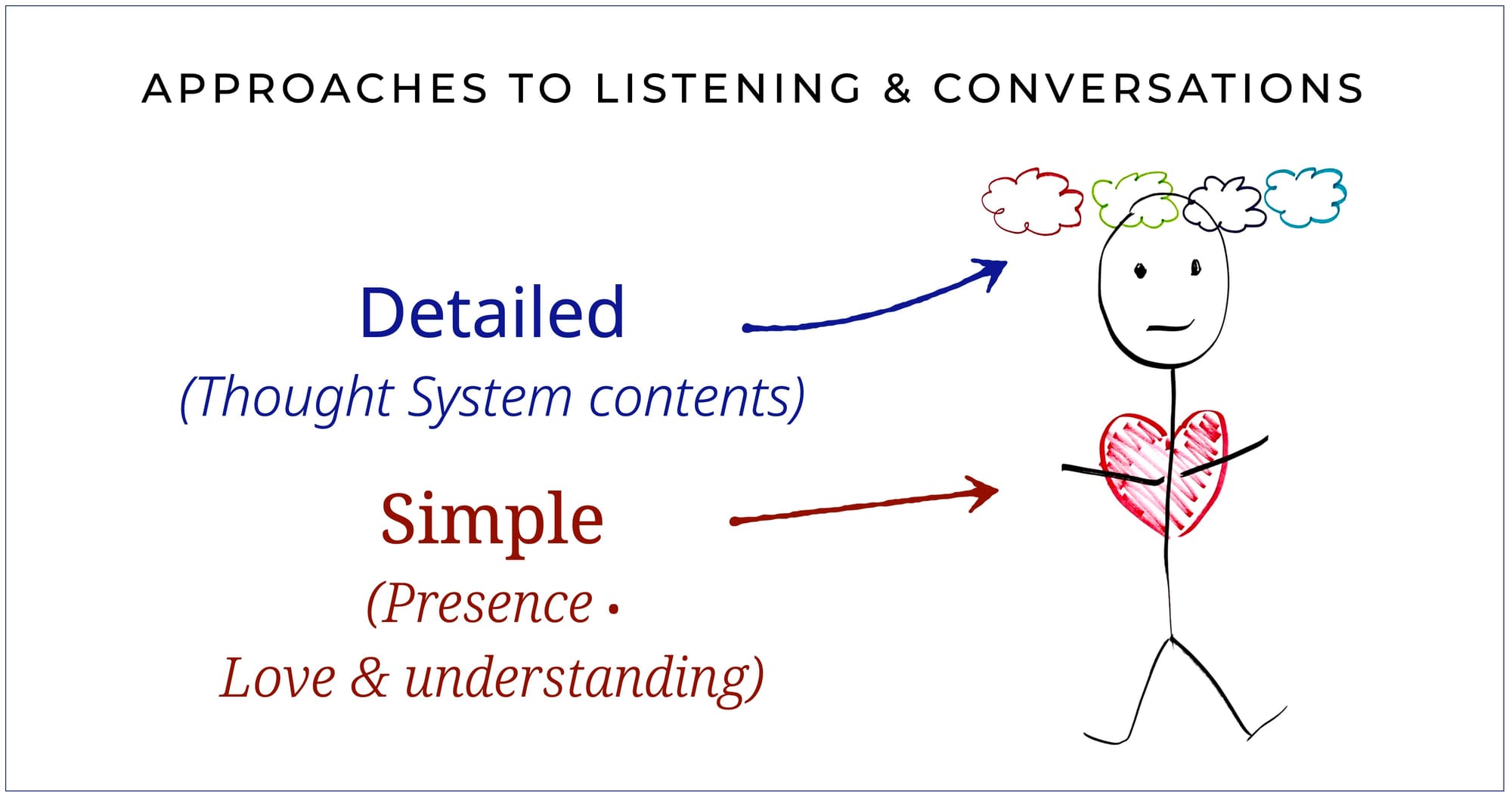
The subtlest of notions to have in your head, when entering these situations:
Am I going in ‘detailed’ or am I going in ‘simple’?
My client tried it, and I received an excited text later that day, after two conversations that had gone completely differently from usual.
A very happy customer.
Not from techniques. Not from preparing what to say. Not from reframing or putting a brave face on it, pretending it didn't matter.
Just from being with another person, without all the detail.
Simple.
Give it a go and let me know how you get on!
💟
Giles
p.s. Want your own 1:1 support, like this? I do these mostly on a Thursday these days. When the time's right for you, here's the link → https://www.gilespcroft.com/individuals/

For Premium 🔖 Subscribers there's a deeper look at the art of listening, with extra written and audio content, in the form of an article entitled Creative Listening.